Valorant Hacks
How Valorant ESP, Aimbot, and Radar Work
Valorant punishes bad information. This guide explains what a modern Windows PC package usually includes, how Vanguard maintenance works, and how to decide if the stack fits how you play.
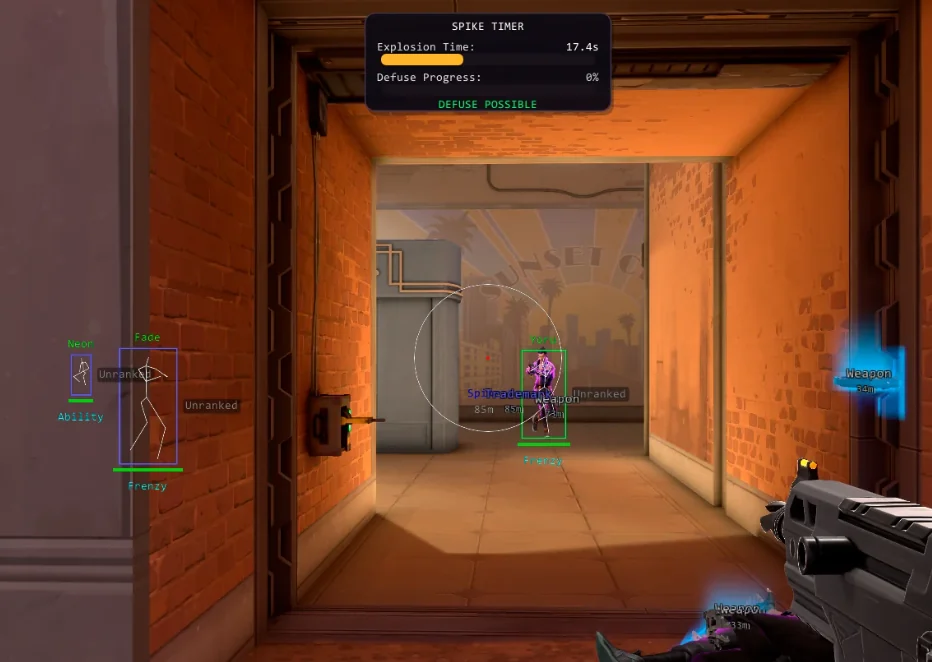
What these tools actually do
Most packages add information or aim assistance on top of the Valorant client. The common stack is ESP for players and the spike, a 2D radar for threats outside your view, and soft aim you can turn down. One license should cover that loop instead of three separate downloads.
Start at the product overview if you want the short version without this essay.
ESP, soft aim, and radar — what each tool is for
ESP answers “who is near me and where is the spike?” Soft aim answers “can I finish the fight once I choose it?” Radar answers “is someone flanking while I plant?” Used together, they cover information and combat. Used badly, they create noisy overlays and obvious aim corrections.
Deep dives live on ESP, aimbot, wallhack, and radar. Read those before you buy if you only need one job done well.
Vanguard and honest expectations
Vanguard protects Valorant. No seller can promise a tool stays hidden forever. What a serious shop can offer is maintenance: rebuilds after patches, a public status note, and clear setup steps. That workflow is on Status.
Before every patch-day queue, read Status. If the note says wait, wait. Settings matter as much as the build.
How to buy and set up without wasting a night
Compare monthly and lifetime on Pricing, then follow Setup after delivery. Keep your order ID ready for Support. If you are still shopping, the buyers guide lists the checklist we wish every shopper used.
Valorant Hacks is built for Windows PC Competitive and Unrated play. It will not replace map knowledge — it amplifies the reads you already practice in matches.